


Retail & eCommerce companies are experiencing extreme
volatility—seasonal spikes, evolving consumer expectations, fragmented
channels, and rapid technology shifts.
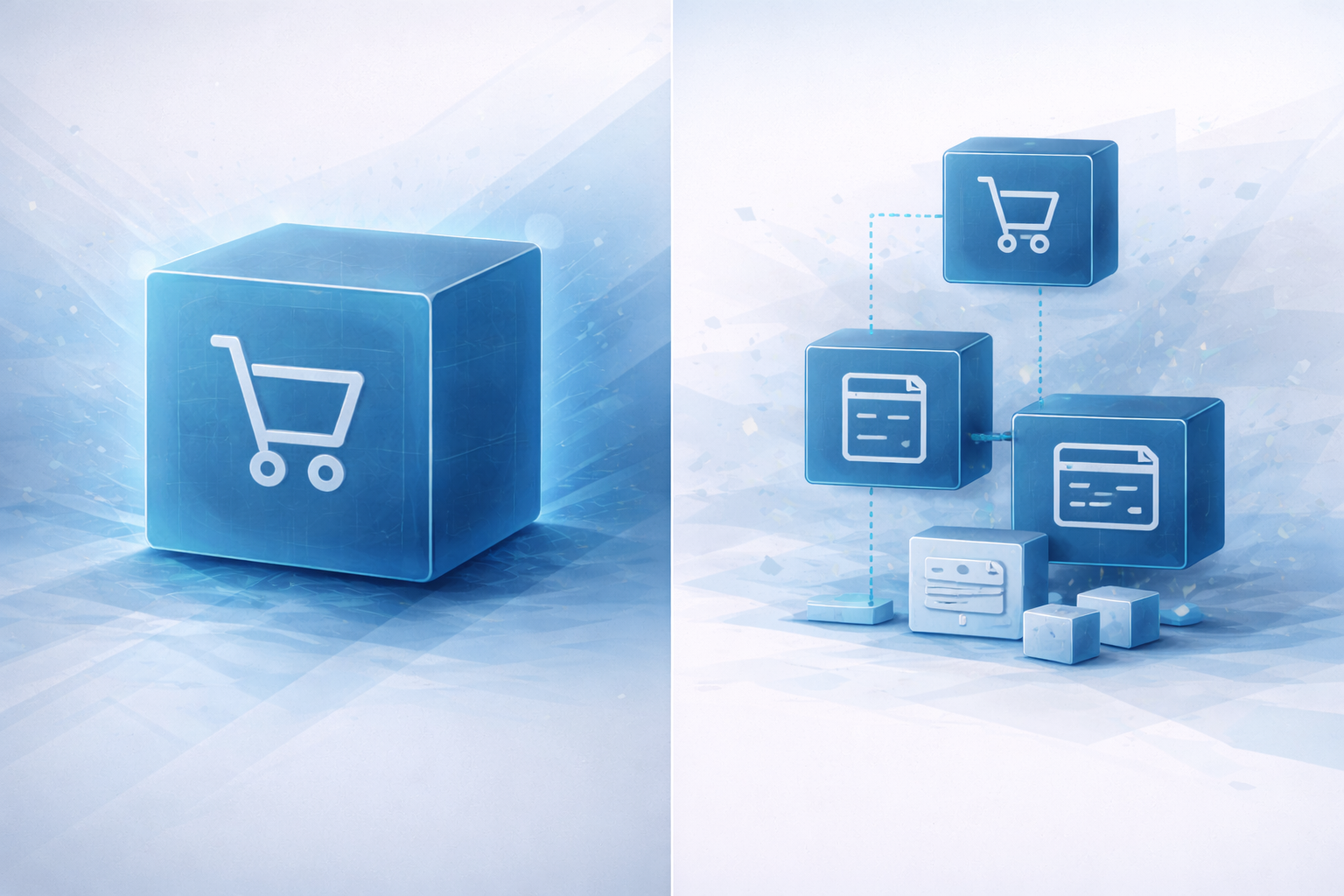
Monolithic commerce architectures cannot keep pace.
This is why companies are moving toward headless +
composable commerce.
1. Faster Innovation Cycles
Front-end and back-end detach completely.
Teams ship UI/UX updates weekly without touching checkout, payments, catalog,
or inventory.
2. Omnichannel Experience Becomes Native
Composable commerce powers:
- Mobile apps
- Web storefronts
- In-store kiosks
- Marketplaces
- Social commerce
All are using the same backend.
3. Personalization Becomes Easier with AI
AI-driven:
- Recommendations
- Search ranking
- Cart recovery
- Promotions
integrate cleanly into a modular architecture.
4. Independent Scalability
High-load areas like checkout or search can scale
independently, without increasing infrastructure cost everywhere.
5. Vendor Flexibility
You are no longer tied to:
- A single CMS
- A single payment gateway
- A single search engine
- A single recommendation engine
The system becomes an ecosystem.
Conclusion
Composable commerce is not a trend—it’s the operating system
for modern retail. Companies that adopt it now will stay ahead in personalization, speed, and engineering agility.
Add a Comment