


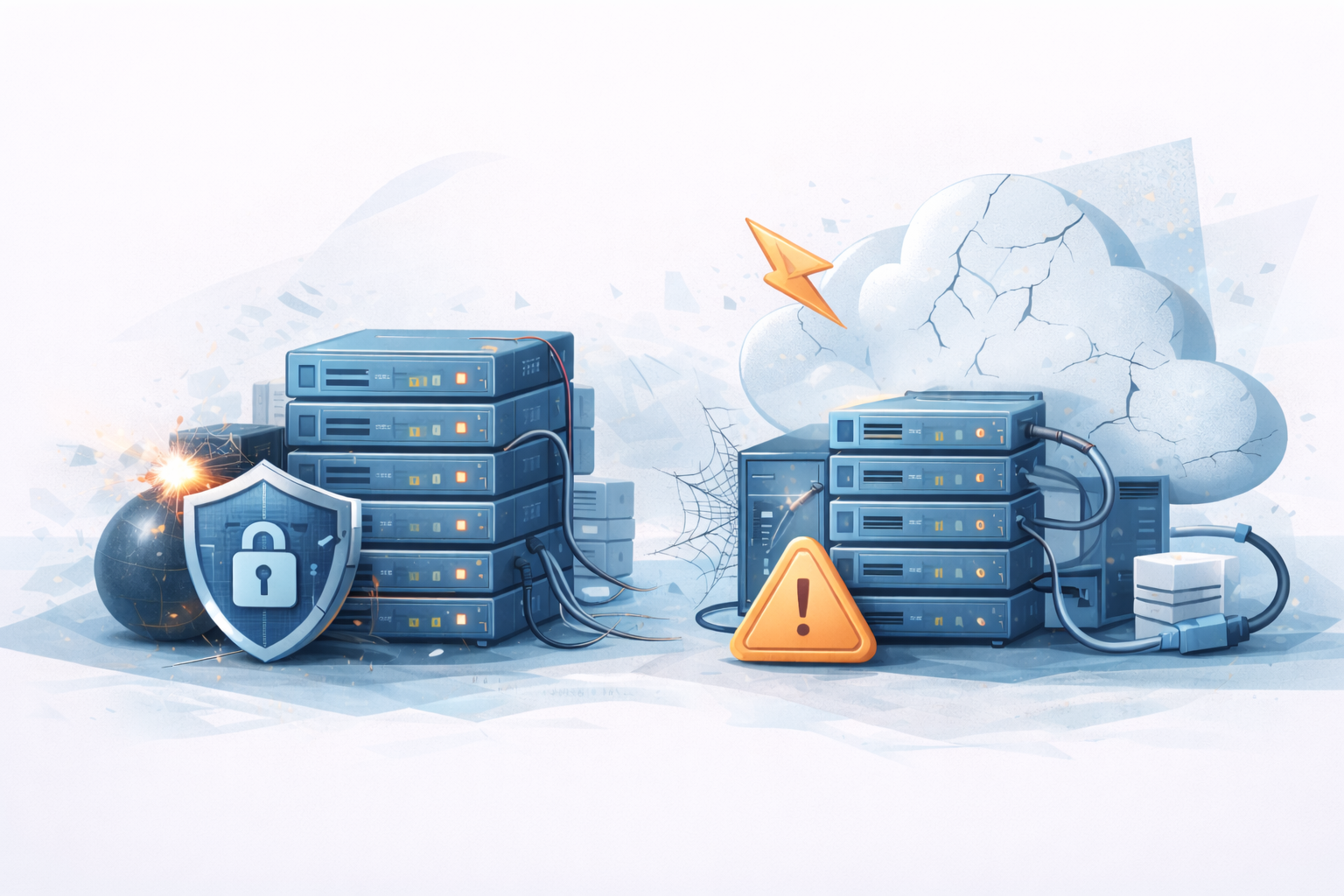
Every business leader has heard the phrase “if it ain’t broke, don’t fix it.” In IT infrastructure, this mindset isn’t just outdated—it’s dangerous. While your aging systems may still technically function, they’re silently draining resources, creating security vulnerabilities, and limiting your competitive advantage. Recent studies show that companies spending over 70% of their IT budgets on maintenance rather than innovation fall behind competitors by an average of 23% in market share growth.
The Real Numbers Behind IT Complacency
- Average cost of maintaining legacy systems: 15-20% higher annually than modern alternatives
- Security vulnerability increases by 300% for systems over 5 years old
- Employee productivity losses due to outdated technology: 18 hours per month per employee
- Customer satisfaction drops by 31% when businesses fail to modernize digital touchpoints
Five Hidden Costs You’re Already Paying
1. The Security Time Bomb
Legacy systems lack modern security protocols. Every day your outdated infrastructure remains operational, you’re vulnerable to increasingly sophisticated cyber threats. Healthcare organizations running outdated EHR systems, for instance, face 67% higher breach risks.
2. Talent Drain
Top IT professionals want to work with modern technologies. Companies stuck on legacy systems struggle to attract and retain skilled talent, leading to knowledge gaps and increased turnover costs.
3. Integration Impossibility
Modern business tools don’t play well with legacy systems. You’re either paying premium prices for custom integrations or missing out on productivity-enhancing tools entirely.
4. Scale Limitations
When growth opportunities arise, outdated infrastructure becomes a bottleneck. Businesses report average delays of 6-8 months when scaling operations are hampered by legacy systems.
5. Compliance Landmines
Regulatory requirements evolve faster than legacy systems can adapt. Industries facing stringent compliance-healthcare, finance, retail-risk substantial penalties.
The Path Forward: Strategic Modernization (500 words)
Assessment Phase
Begin with comprehensive infrastructure auditing. Identify systems approaching end-of-life, security vulnerabilities, and integration pain points.
Prioritization Matrix
Not everything needs immediate replacement. Use a risk-versus-benefit framework:
- High risk, high benefit: Immediate priority
- High risk, low benefit: Schedule for near-term replacement
- Low risk, high benefit: Strategic upgrade path
- Low risk, low benefit: Monitor and maintain
Phased Implementation
Avoid the “rip and replace” trap. Successful modernization happens incrementally, maintaining business continuity while upgrading infrastructure.
Industry-Specific Considerations
Healthcare: Focus on HIPAA compliance, EHR integration, and telehealth capabilities
Retail/eCommerce: Prioritize PCI compliance, omnichannel integration, and scalable cloud infrastructure
Finance: Emphasize data security, disaster recovery, and regulatory compliance automation
Conclusion
The question isn’t whether to modernize your IT infrastructure, but when and how. Every day of delay compounds costs, risks, and missed opportunities. Strategic modernization transforms IT from a cost center into a competitive advantage.
Add a Comment